Every year around this time somebody publishes a list of the top forty AR games, and most of the list is dead by the time the piece runs. This is not that list. This is the games that had actual weekly active players last quarter, sorted by what each of them does differently, so a reader who already plays one can pick the next.
First, what counts. An AR game, for this piece, is one where a real coordinate matters and the camera does more than a filter. Games that use the camera for a static overlay and could be played on a couch, most of the crypto-labelled AR titles from 2022 fell into this, are not on the list. Games that use location but not the camera, Zombies Run being the honest exception, are here only if the location part is core.
Pokémon Go is still the giant. Ten years in, more monthly players than any three of the others combined, and a live-events calendar that fills a city block on Community Day weekends. It is also, still, a closed economy: every rare creature you catch stays on Niantic's servers and cannot leave. If the ceiling of that fact has not started to matter to you yet, you have not been playing long enough. When it does, you will look at the rest of this list.
Ingress Prime is the Niantic sibling most Pokémon players never try, and the one the hardcore AR community respects most. Two factions capture and defend portals across your city. Walks are longer, tactics matter, and the community is denser per capita than any of the collection games. There is no take-out reward here either, the reward is the territorial game, but if you like the walking and want the strategy layer to be the point rather than a garnish, this is the one to install first.
Peridot is Niantic's nurture-loop entry. You raise a small creature, take it to real places, breed it with other players' creatures, and its traits develop from where you have been. It is one of the best-looking AR games shipping, the creature stays put in the camera view better than anything else on this list, and it scratches an itch none of the collection titles do. Closed economy again, which is the pattern here.
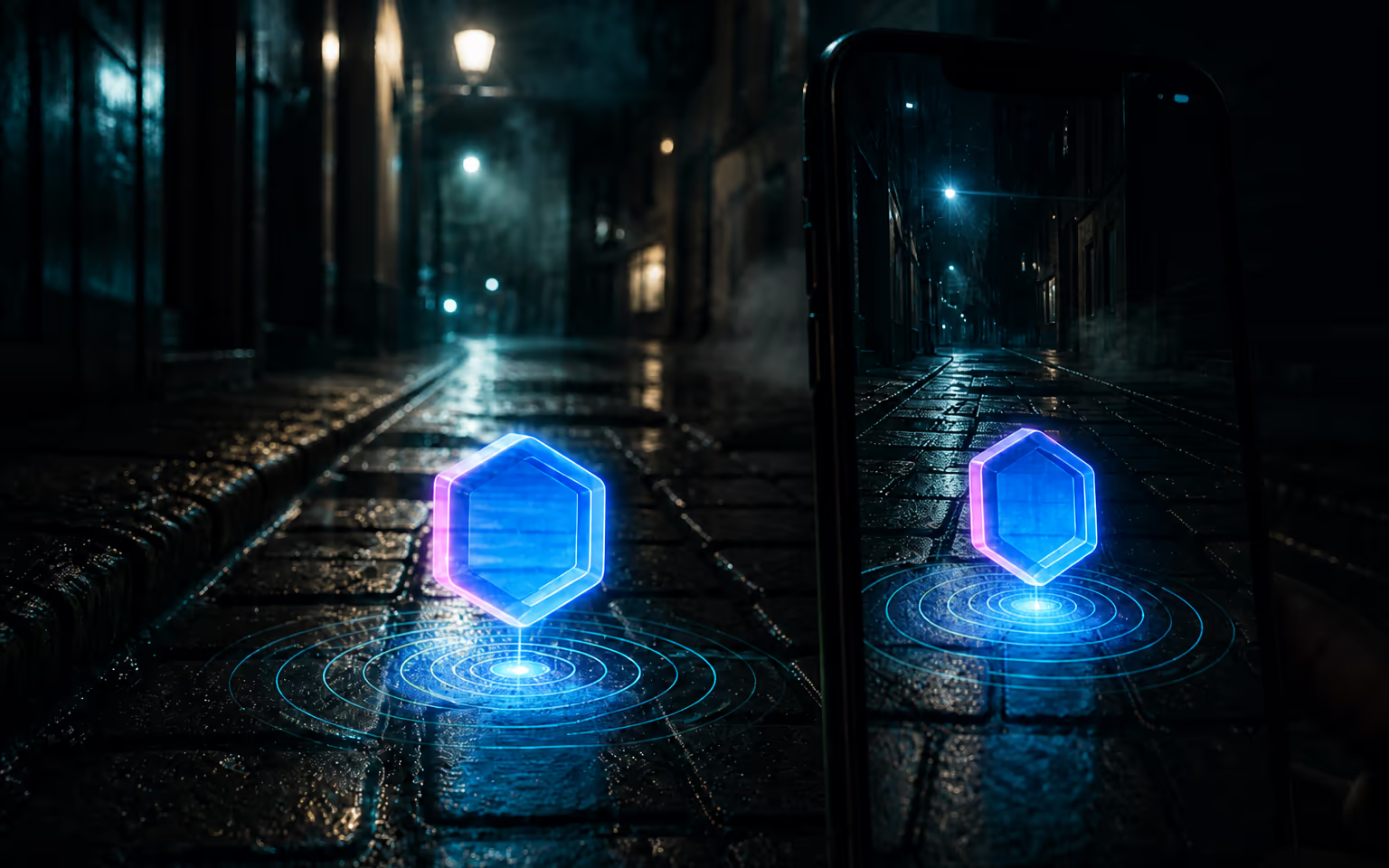
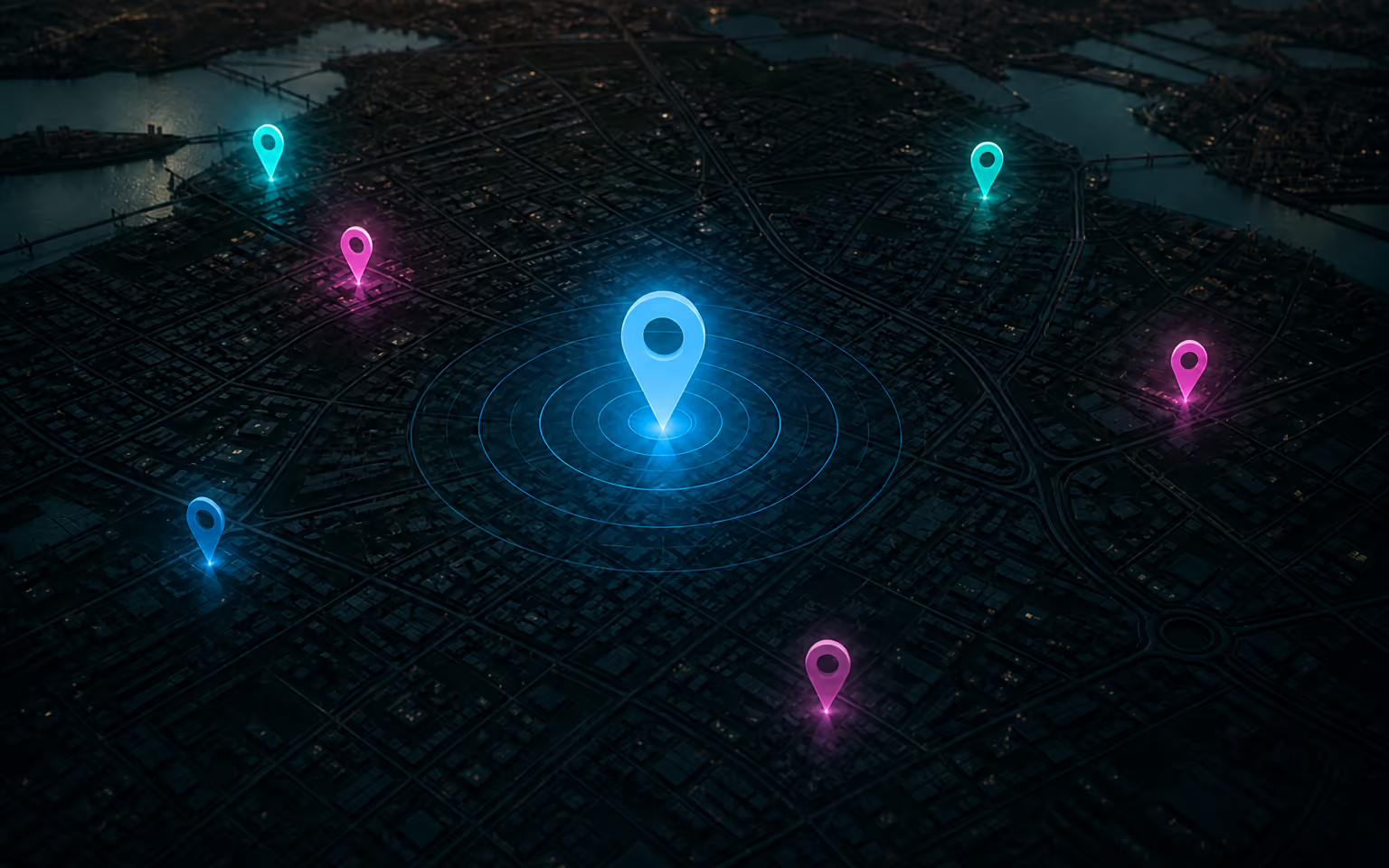
Seekprotocol. We build this one, so weigh the paragraph accordingly. The shape is close to Pokémon Go, a map, a camera, an AR encounter at real coordinates, with one structural change: what you collect settles to your own wallet on Solana. A limited-edition drop from a brand you like is a token; a rare from a Seek publisher is an NFT; the coin at your local park is transferable. The economy is open, which is the piece the closed games are missing. Free on iOS and Android. The app is here. Under the old name it shipped as SeekAR until 10 August 2026: same product, same publisher, only the icon changed.
Jurassic World Alive is the dinosaur-collection game from Ludia, and the closest polish-competitor to Pokémon Go proper. Stronger PvP scene than most, cleaner UI than the smaller Pokémon-shape clones, and a genuinely dedicated player base. Closed economy again. If the loop you loved was the catching and evolving specifically and you want a version of that with better balance, this is where a lot of ex-Pokémon-Go players ended up.
Draconius GO leans fantasy, dragons, elemental battles, magic school subplots, and has aged better than most of its cohort. Landlord GO is the location-based real-estate flipper: buy virtual claims on real buildings, earn from the foot traffic that walks past them. Neither is going to displace the giants but each has kept a real audience through what should have been the dip, which is more than most 2019-era AR games can say.
Pikmin Bloom, also Niantic, is barely a game and is on this list for that reason. It turns your daily walking into cultivating a garden of little creatures who follow you. If what you liked about Pokémon Go was the being-outside part rather than the catching part, Pikmin Bloom is more of that with less pressure. The people who play it religiously call it a wellness app; the people who quit call it under-designed. Both are right and it depends on what you want.
Zombies Run is the audio-first outlier, and the one entry here that is not visually AR at all. Your headphones tell you zombies are behind you; the game triggers plot beats based on where you are and how fast you are moving. It has been shipping since 2012 and is on its ninth season. If the location piece matters more to you than the camera piece and you like a story, this is the least-imitated game on the list and the one people still recommend a decade in.
Geocaching is not an AR game and belongs here anyway. The oldest ancestor of everything above, still running, still adding caches. A physical container hidden at a coordinate, a logbook you sign when you find it. In software terms it is a text database with a map on top; in purpose terms it is the same thing as every game above, go somewhere you would not have gone. Try a classic geocache in your city one weekend and see which format actually feels better to you. Half the time it depends on the walk.
Which to try, depending on what worked for you last time. If you want the closest thing to Pokémon Go with a real economy under it: Seekprotocol. If you want the deepest tactical layer: Ingress Prime. If you want the collection loop with better AR polish: Peridot or Jurassic World Alive. If you want the walking-as-wellness piece: Pikmin Bloom. If you want story: Zombies Run. If you want to try a completely different format that predates all of it: Geocaching.
What is not on this list, and why. Any of the 2021-vintage crypto AR titles that promised metaverse-scale worlds and shipped a slideshow. Any of the browser-AR experiments that never got out of demo. Wizards Unite, because Niantic shut it down in 2022 and a large share of people who ask this question are actually looking for it specifically. And Genesis of Fate, which is genuinely trying but has not built the audience to belong here yet; check back next year.
Two things to watch for 2027. Hardware: Apple's Vision line and Meta's next glasses cycle both remove the phone from the camera pass, and the games that were designed for a phone-in-hand posture will not automatically translate. And chain economics: as more games settle rewards on-chain and treat what a player collects as portable, the closed-economy problem that drives half the traffic to this search category starts to feel harder to defend.
If you play one AR game, keep playing it, the install base is the moat and there is no shame in that. If you play two, the second one is where the interesting comparisons start. The one we make is here. The rest are one app-store search away, and worth the ten minutes.