« NFT en réalité augmentée » est une expression que la plupart des articles sur le sujet oublient de définir, alors commençons par là. En pratique, trois choses différentes sont appelées NFT AR, et elles résolvent des problèmes complètement différents. Une seule d’entre elles, selon nous, est réellement nouvelle, et nous y viendrons.
La définition la plus ancienne, c’est le NFT à visionneuse AR. Tu possèdes une image ou un modèle 3D sous forme de NFT ; une appli séparée l’affiche dans le champ de ta caméra. Le NFT lui-même n’est qu’un fichier. Ce qui est « AR », c’est l’appli. C’est là que la catégorie est née, vers 2021, et c’est ce qui a produit l’essentiel des premiers articles de presse : achète une sculpture virtuelle, lève ton téléphone, vois-la dans ton salon. Le problème, c’est qu’une fois que tu l’as vue, tu l’as vue. Rien ne te pousse à aller où que ce soit, et le NFT ne fait rien que le fichier ne pourrait faire sur une page web.
La deuxième définition, c’est le NFT d’art pensé pour l’AR. Ici, l’objet est conçu pour être vu dans l’espace, et son rendu sur écran est moins bon que son rendu en AR. Une poignée d’artistes créent des objets spécifiquement pour les affichages AR, et c’est la direction qu’un collectionneur sérieux considère comme de l’art. La blockchain fait ce qu’elle fait pour toute œuvre : elle enregistre la provenance. L’AR fait ce que ferait le mur d’un musée : donner à l’objet une présence physique qu’un écran ne peut pas offrir. Intéressant, mais rare. La plupart des projets qui se disent NFT AR ne se sont pas engagés dans cette voie.
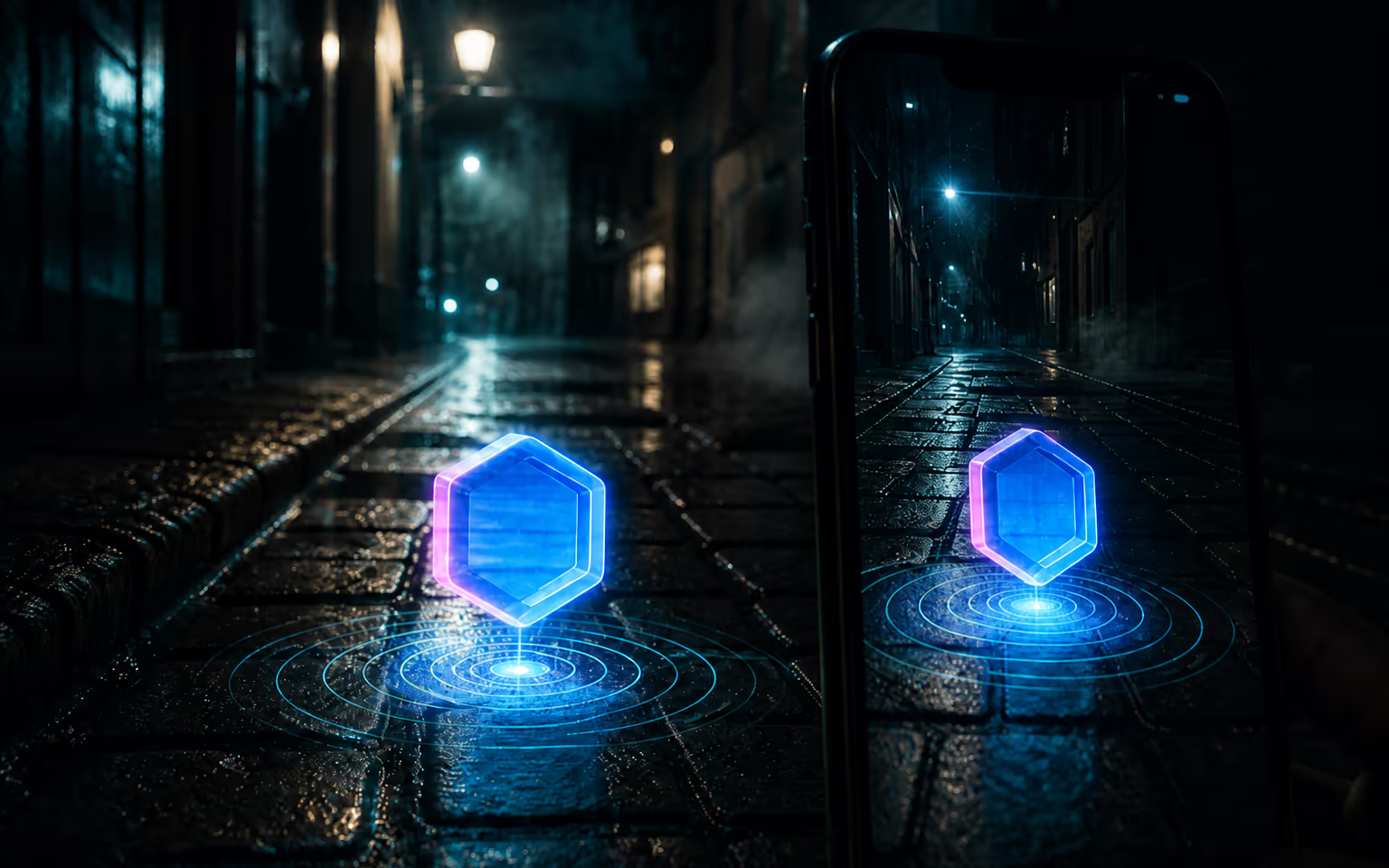
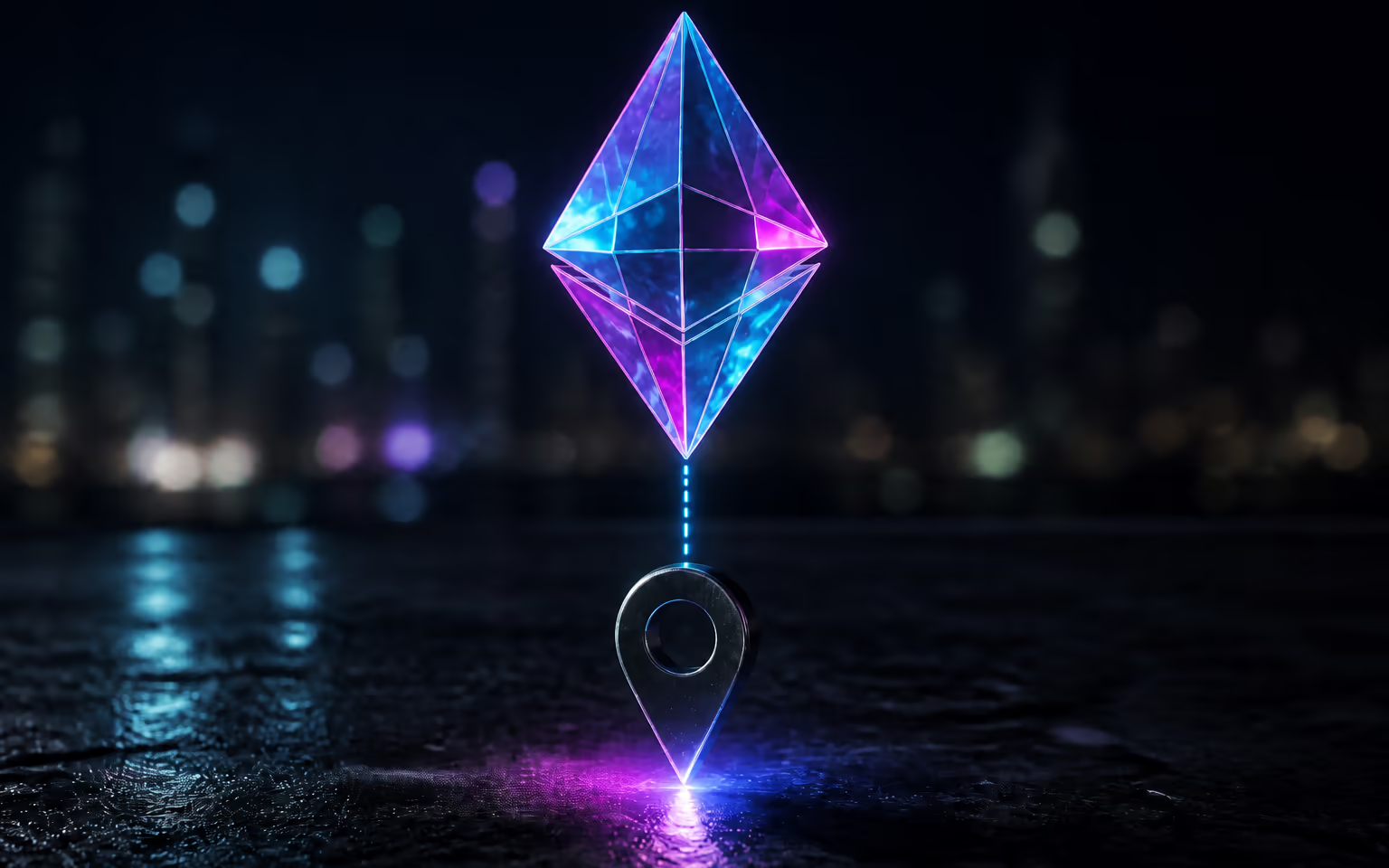
La troisième définition, c’est le NFT ancré : un NFT émis vers une coordonnée plutôt que vers un portefeuille. Il n’a pas de propriétaire attitré tant que quelqu’un ne s’est pas physiquement rendu à cette coordonnée pour le récupérer. C’est cette définition qui est vraiment nouvelle. La blockchain enregistre désormais quelque chose qu’aucune blockchain n’enregistrait avant : non pas qui possède une chose, mais où elle se trouve avant d’appartenir à quelqu’un. L’AR s’occupe du rendu. La blockchain s’occupe du règlement. La coordonnée, c’est ce qui fait la différence.
Les NFT ancrés sont le tiers intéressant de la catégorie, et c’est d’eux que parle la suite de cet article. Les deux premiers sont réels, ils existent et continueront d’exister. Mais si « NFT AR » est une recherche en hausse, c’est à cause du troisième : pas parce que plus de gens veulent un fichier 3D posé sur leur table basse, mais parce qu’ils commencent à vouloir des tokens qui ont un sens à un endroit précis.
Pourquoi la coordonnée compte. Un NFT qui vit dans un portefeuille est, fonctionnellement, une entrée dans une base de données. La blockchain garantit l’entrée, mais l’entrée se moque de l’endroit où se trouve son propriétaire. Un NFT qui vit à une coordonnée porte une seconde garantie : celui qui finit par l’avoir était physiquement à cette coordonnée avant de l’obtenir. C’est cette garantie qui le rend utile comme preuve de présence à un concert, comme jeton d’accès à un lieu précis, comme édition limitée pour une boutique précise, ou comme histoire qui ne se dévoile que si tu visites l’endroit où elle se déroule.
Il existe aujourd’hui quatre façons de combiner AR et NFT, qui correspondent aux trois définitions ci-dessus, plus une. La visualisation : ton NFT est un asset 3D et l’AR l’affiche. C’est la définition numéro un ; des applis à large base installée comme la visionneuse mobile d’OpenSea le font. C’est une fonctionnalité sympa, et c’est un problème résolu.
L’ancrage : le NFT est épinglé à une coordonnée et affiché à cet endroit. C’est là que se situe Seekprotocol, avec une poignée de plateformes AR centrées sur la localisation. Le défi technique n’est pas le rendu, c’est de savoir si la personne qui récupère était physiquement là. Si tu règles ça, le token vaut plus que ce que la coordonnée a coûté pour le placer.
La réclamation : le NFT est un billet qui ne se débloque qu’en AR, à un lieu ou un événement précis. Rare sous forme commerciale, mais utile pour les expériences à accès restreint : tu récupères le billet en AR à la porte, et il devient un NFT d’accès pour la salle. Le mécanisme mélange ancrage et contrôle d’accès.
Le contrôle d’accès : le NFT est nécessaire pour débloquer une expérience AR que tu ne peux voir que si tu le détiens. Les mécènes d’un musée qui possèdent un NFT de mécénat précis voient dans les galeries une surcouche de conservateur que les autres visiteurs ne voient pas. C’est la définition qui a le plus d’avenir, parce qu’elle permet à un NFT de faire ce que le fichier derrière lui ne peut pas faire : servir de médiateur à une expérience qui se déroule dans un lieu réel, en ce moment, et que d’autres personnes vivent aussi.
Un exemple, pour rester concret. Imagine un musée qui place une série limitée d’objets AR autour de sculptures précises, déblocables uniquement par les détenteurs de son NFT de carte de membre. Ce ne serait jamais énorme en chiffres bruts, mais c’est exactement le type d’usage qui montre aux acheteurs institutionnels que ce format n’est pas un gadget. Les NFT ancrés dans les lieux culturels sont l’une des applications à court terme les plus évidentes.
Un autre. Les drops AR de Coinbase en 2025 : une expérience commerciale où des NFT à récupérer étaient placés lors d’événements aux couleurs de Coinbase, la présence vérifiée via la caméra, avec un mint direct dans le portefeuille. Le plus intéressant, c’était l’analyse d’abandon qu’ils ont publiée. Le taux de réclamation avec présence vérifiée était bien plus élevé que celui de n’importe quel e-mail promotionnel de taille comparable. Les gens se déplacent quand ils peuvent tenir la chose.
Nos propres accords d’éditeurs via Seekprotocol ont suivi le même schéma à plus petite échelle. Des marques de retail placent des assets en édition limitée dans leurs boutiques phares ; des festivals de musique ancrent des objets de collection près des scènes ; des offices de tourisme proposent des parcours AR libres avec une récompense à chaque étape. Les volumes restent modestes en valeur absolue et la catégorie est jeune, mais le schéma est constant : quelqu’un qui s’est physiquement déplacé pour récupérer un NFT a bien plus de chances de rouvrir l’appli la semaine suivante que quelqu’un qui a reçu le même asset par un airdrop passif.
Le choix de la blockchain compte ici plus que dans presque toute autre catégorie de NFT. Les NFT ancrés vivent ou meurent selon le coût du règlement. Récupérer une récompense de deux euros doit coûter moins d’un centime à enregistrer on-chain, sinon l’économie ne tient plus. Solana est notre réponse. Base est un second choix légitime, si tu acceptes la latence supplémentaire du rollup. Ethereum L1 ne passe pas la barre pour les drops de faible valeur qui font le volume de la catégorie. Ce n’est pas un parti pris technique, c’est le chiffre qui décide si une récompense précise vaut la peine d’être mintée.
Ce qui ne marche toujours pas. La falsification, c’est la difficulté honnête. Une coordonnée GPS brute se falsifie en un rien de temps ; on peut faire croire à un téléphone qu’il est à Manhattan alors qu’il est sur un canapé à Berlin. Toute plateforme NFT AR sérieuse sur les assets ancrés doit combiner le GPS avec des signaux qu’un fraudeur ne peut pas produire à bas prix : radio ambiante, attestation de l’appareil, continuité du mouvement. Nous détaillons les nôtres dans le livre blanc. L’idée générale, c’est que l’ancrage n’est fiable que dans la mesure où la vérification multi-signaux derrière l’est. Fais confiance à un vérificateur à signal unique à tes risques et périls.
L’intérieur est le deuxième problème difficile. La précision du GPS dans un centre commercial ou un immeuble de bureaux est si mauvaise qu’un drop basé sur des coordonnées ne peut pas vraiment fonctionner sans balise (Bluetooth, ultra-large bande) ou QR code de secours. C’est pourquoi la plupart des drops ancrés en 2026 se font en extérieur. La technologie pour l’intérieur à grande échelle existe, mais elle demande une infrastructure sur place que la plupart des lieux n’ont pas encore.
Et les objets portables. Le futur des lunettes AR ne cesse d’être annoncé et ne cesse de prendre du retard. Les NFT ancrés fonctionnent aujourd’hui sur téléphone ; ils fonctionneront mieux sur des lunettes, quand les lunettes seront courantes. Personne dans la catégorie ne devrait attendre ça pour lancer un produit, mais personne ne devrait non plus survendre la qualité visuelle. Ce que tu vois à travers la caméra d’un téléphone en 2026, c’est ce que tes utilisateurs vivent réellement.
Si c’est la version NFT ancré que tu veux essayer, Seekprotocol est l’appli que nous développons. Si tu veux en placer un à la coordonnée de ton choix, le côté éditeur du même protocole est l’outil qu’il te faut. La catégorie est assez petite pour qu’un projet sérieux qui se lance maintenant ait une vraie chance de devenir l’implémentation de référence du domaine, et c’est ce que nous essayons de faire.
En bref. Les NFT AR, ce sont trois choses différentes sous la même expression. Deux sont utiles. Une seule est vraiment nouvelle. La nouvelle, c’est le NFT ancré : un token épinglé à un lieu, qui attend que quelqu’un arrive. C’est la définition à suivre.